Thursday, 20 December 2012

Rezepte von Jamie Oliver und Co.: Ungesünder als Fertigmahlzeiten

100 Kochrezepte von Starköchen vs. 100 Fertiggerichte - eigentlich sollte ein derartiger Vergleich eindeutig ausgehen. Doch das Ergebnis einer Untersuchung von britischen Forschern überrascht: Feinschmecker-Rezepte der Küchenmeister sind ungesünder als Mahlzeiten aus dem Supermarktregal.
Ausgerechnet Jamie Oliver. Der lässige Starkoch aus Großbritannien, der in seiner Heimat eine Kampagne für besseres Schulessen ins Leben rief, der sich nicht scheute, amerikanischen Kindern in einer Fernsehshow den Unterschied zwischen Kartoffeln und Tomaten zu erklären. Und der mit seinen Kochbüchern seit Jahren auch in Deutschland die Ratgeber-Bestsellerlisten füllt. Ausgerechnet Oliver präsentiert in seinen Werken Rezepte, die ungesünder sind als so manches Fertiggericht. Das hat eine Studie in der Weihnachtsausgabe des "British Medical Journal" ergeben.

http://www.spiegel.de/gesundheit/ernaehrung/rezepte-von-jamie-oliver-und-co-ungesuender-als-fertigmahlzeiten-a-873759.html#ref=rss

Thursday, 13 December 2012

Kitchen toys, more gifts for the foodies in your life

See more:
http://bites.today.com/_news/2012/12/12/15867754-kitchen-toys-more-gifts-for-the-foodies-in-your-life?lite%3Focid=twitter

Beef's Raw Edges

Margaret Lamkin doesn’t visit her grandchildren much anymore. She never flies. She avoids wearing dresses. And she worries about infections and odors.
Three years ago, at age 87, Lamkin was forced to wear a colostomy bag for the rest of her life after a virulent meat-borne pathogen destroyed her colon and nearly killed her.
What made her so sick? A medium-rare steak she ate nine days earlier at an Applebee’s restaurant.
Lamkin, like most consumers today, didn’t know she had ordered a steak that had been run through a mechanical tenderizer. In a lawsuit, Lamkin said her steak came from National Steak Processors Inc., which claimed it got the contaminated meat from a U.S. plant run by Brazilian-based JBS — the biggest beef packer in the world.
“You trust people, trust that nothing is going to happen,” Lamkin said, “but they (beef companies) are mass-producing this and shoveling it into us.”


Read more here: http://www.kansascity.com/2012/12/06/v-project_one/3951690/beefs-raw-edges.html#storylink=cpy

Friday, 7 December 2012

Britain in nutrition recession as food prices rise and incomes shrink

Austerity Britain is experiencing a nutritional recession, with rising food prices and shrinking incomes driving up consumption of fatty foods, reducing the amount of fruit and vegetables we buy, and condeming people on the lowest incomes to an increasingly unhealthy diet.
Detailed data compiled for the Guardian, which analysed the grocery buying habits of thousands of UK citizens, shows that consumption of fat, sugar and saturates has soared since 2010, particularly among the poorest households, despite the overall volume of food bought remaining almost static. Food experts and campaigners called for government action to address concerns the UK faces a sustained nutritional crisis triggered by food poverty, which is in turn storing up public health problems that threaten to widen inequalities between rich and poor households.

Gourmet-Skihütten: Trüffel in der Bergstation

Kaviar statt Kasknödel und Kaiserschmarren: Immer mehr Skihütten in den Alpen servieren Haute Cuisine anstelle deftiger Sattmacher. Und neben urigen Stuben schießen immer häufiger trendige Alpin-Lounges aus dem Boden. Kaum eines der Top-Skigebiete kommt noch ohne Gourmeteinkehr und Designhütten aus. "Der Trend zu feinerem Essen und einem moderneren Ambiente auf den Berghütten wird im gesamten Alpenraum immer stärker", sagt die stellvertretende Tourismusdirektorin von St. Anton am Arlberg, Wilma Himmelfreundpointner.

Genusshandwerker

Einfach gut essen - eine Leidenschaft, die wir mit vielen Menschen teilen. Auf unseren Reisen durch die Regionen Europas treffen wir nicht nur auf auffallend leckere Produkte, sondern entdecken dabei ganz besondere Menschen, die in ihrer Arbeit konsequent zugunsten der Genussqualität handeln und dabei Rücksicht auf Tier, Mensch und Umwelt nehmen. Deren Genusshandwerk bringen wir jede Woche auf deutsche Küchentische. 

Zweierlei vom Iberico mit gefüllten Zucchiniblüten

http://www.kochbar.de/rezept/449627/Zweierlei-vom-Iberico-mit-gefuellten-Zucchiniblueten.html

Pochiertes Iberico Filet im Kräuter Quartett (Nicole da Silva) Lies mehr über Pochiertes Iberico Filet im Kräuter Quartett (Nicole da Silva)

http://www.kochbar.de/rezept/88981/Pochiertes-Iberico-Filet-im-Kraeuter-Quartett-Nicole-da-Silva.html

Friday, 23 November 2012

Manresa Restaurant


Seeohren: Gourmet-Schalentier aus Frankreich

http://www.spiegel.de/fotostrecke/seeohren-gourmet-schalentier-aus-frankreich-fotostrecke-53693.html

Winzer in der Pfalz: Alles Essig

Sobald die Ernte eingebracht ist, wird es still in der Pfalz. Für Georg Wiedemann beginnt dann jedoch erst die Arbeit. Er erntet seine Trauben, wenn sie schon fast Rosinen sind. Im Keller wird aus ihnen Essig, der mittlerweile Weltruhm genießt.
Gourmetköche kaufen bei ihm ein. Selbst das schwedische Königshaus und der saudi-arabische König gehören zu den Kunden von Wiedemanns Doktorenhof in Venningen. Der saudi-arabische König ließ sich den Essig für Rosskuren schicken und war begeistert. Er hilft den Pferden bei der Verdauung des harten Büffelgrases. 

 http://www.spiegel.de/reise/deutschland/winzer-in-der-pfalz-alles-essig-a-864731.html

Gelobt sei, was scharf macht

Ein Jutesack, gefüllt mit weißem Pfeffer, siebzig Kilogramm schwer. Sieht so vielleicht das ideale Hochzeitsgeschenk aus? Heinrich Knak jedenfalls, der in Altona eine Gewürzmühle betrieb, war ganz dieser Ansicht, schätzte das organische Gut und schenkte seiner Tochter Elisabeth diesen ungewöhnlichen Notgroschen, als sie 1962 den Journalisten Peter Ruge heiratete.

Der Traum des Konditors

Lucia liebt Edgardo und umgekehrt.
Doch Enrico, Lucias Bruder, gibt sie Arturo.
Worauf Lucia – was man zwar nicht sieht, schon gar nicht vom äußersten Platz im zweiten Rang – Arturo ersticht und, das Messer noch in der Hand, ihr Kleid voller Blut, im hellen Wahn die Hochzeit mit Edgardo besingt.
Der erfährt, dass die Liebste, vom Kummer zerstört, nach ihm ruft.
Doch zu spät.

Momofuku Shoto: Yes, it’s the best restaurant in Toronto. Here’s why

How do you surprise a new audience when you’re one of the most imitated chefs on the planet? How do you live up to the hype and hope of a city that expects you to transform what it means to go out to eat?
At the counter around a small open kitchen in one of New York chef David Chang’s three new Toronto outposts, a part of the answer to those questions fell into place over two extraordinary meals in the last month.

Friday, 16 November 2012

Breakfast, lunch and dinner: Have we always eaten them?

British people - and many others across the world - have been brought up on the idea of three square meals a day as a normal eating pattern, but it wasn't always that way.
People are repeatedly told the hallowed family dinner around a table is in decline and the UK is not the only country experiencing such change.
But when people worry that breaking with the traditional three meals a day is harmful, are they right about the traditional part? Have people always eaten in that pattern?


http://www.bbc.co.uk/news/magazine-20243692

5 Easy Ways to Ruin a Thanksgiving Turkey

The turkey is the crux of the Thanksgiving Day meal. You can have the best mashed potatoes and gravy this side of the universe, but if your turkey is a sawdust nightmare, your day could end up being much less successful than you’d hoped. To help you make the juiciest, most show-stopping turkey you can, here are 5 mistake many beginning cooks make on the big day and how you can prevent them.


Thursday, 25 October 2012

China now eats twice as much meat as the United States

China now eats twice as much meat as the United States and must rein in its appetite or face a food crisis, one of the country's leading farm experts has warned. 

http://www.telegraph.co.uk/news/worldnews/asia/china/9605048/China-now-eats-twice-as-much-meat-as-the-United-States.html


Warum ekeln sich die Deutschen vor Innereien?

Mampfen wir bald nur noch Fast Food? Marin Trenk erforscht weltweit Esskulturen. Im Interview erklärt der Ethnologe, wie die Schweinshaxe in Thailand ankommt - und warum die Japaner die Gewinner der kulinarischen Globalisierung sind.

Monday, 15 October 2012

What Your Spoon Says About You

Spoons hold up a mirror to the surrounding culture precisely because they are universal. There are fork cultures and there are chopstick cultures, but all the peoples of the world use spoons.

http://www.theatlantic.com/technology/archive/2012/10/what-your-spoon-says-about-you/263416/

Wednesday, 3 October 2012

One in five Brits think parsnips grow on trees

The same amount (20 per cent) think that melons grow in the soil, according to the poll of 2,000 adults.
Nearly a third confessed that they have no idea how some of the most basic fruit and vegetables grow, with 10 per cent saying tomatoes have to be dug up.
A quarter of adults (25 per cent) are regularly foxed when kids ask them where certain foods come from, the research for Potato Week found.
A fifth have never heard of a King Edward or a Maris Piper, but just one in 20 feel completely embarrassed by their lack of knowledge.
Other common blunders include naming a Granny Smith as a variety of potato (5 per cent). 

http://www.telegraph.co.uk/foodanddrink/foodanddrinknews/9582261/One-in-five-Brits-think-parsnips-grow-on-trees.html 

Jamie Oliver put to the test

His new book promises '15 Minute Meals’, but can a competent cook really rustle them up that fast? 

My kitchen is full of smoke. I’m tossing a sizzling wok of vegetables with my left hand and searing a sirloin steak with my right. Mushrooms are browning in another pan, and a nest of egg noodles is congealing in a pot of bubbling salt water. I’m attempting a recipe from Jamie Oliver’s new book, Jamie’s 15 Minute Meals, and rather than the “delicious, nutritious, super-fast food” that’s promised, I’m feeling flustered, hungry and stressed out.
Oliver’s latest culinary offering, the sequel to his 30 Minute Meals book and Channel 4 series, has been in the shops for just five days and is ranked third on Amazon’s food and drink bestseller list. The much-anticipated volume, priced at £26 (but already down to half price online), guarantees fast, fresh meals for a family of four in a quarter of an hour.

 http://www.telegraph.co.uk/foodanddrink/foodanddrinkbooks/9579067/Jamie-Oliver-put-to-the-test.html

Sunday, 30 September 2012

Geheimberuf Restauranttester Betrug an der Wachtelbrust

Edles Essen ist ihm über. Er bestellt es nur, um Köche und Kellner zu prüfen. Der Restaurant-Cheftester dirigiert ein Heer von Agenten des guten Geschmacks. Hier berichtet er von verdeckten Einsätzen. Manchmal wird er erkannt - doch dann ist es schon zu spät.

Normandie für Feinschmecker: Heimat des guten Geschmacks

Wer im Urlaub abnehmen will, sollte die Normandie im großen Bogen umfahren. Alle anderen können in der Gourmet-Region schlemmen wie Gott in Frankreich - und von den Einheimischen lernen, was man macht, wenn eigentlich nichts mehr reingeht in den Magen. 

Französische Gourmet-Schnäppchen: Genuss im Bus

In der großen Gourmet-Nation Frankreich verkommen die Sitten. Fast-Food-Ketten sind auf dem Vormarsch, die astronomischen Preise der Spitzenrestaurants können sich Normalbürger nicht leisten. Eine Schnäppchen-Aktion soll jetzt Genießer mit kleinem Budget anlocken.

Sir Roger Moore: boycott Fortnum & Mason until they stop selling foie gras

Sir Roger Moore is calling for customers of Fortnum & Mason to 'take action with their wallets' and boycott the store until it stops selling foie gras. 

 http://www.telegraph.co.uk/foodanddrink/foodanddrinknews/9576957/Sir-Roger-Moore-boycott-Fortnum-and-Mason-until-they-stop-selling-foie-gras.html

Sunday, 1 July 2012

Cooking with Tea

A few weeks back we talked about the different types of teas and why they are so good for you. This week I wanted to expand on the topic because believe it or not, you can do more with tea than just drink it. Tea is a hot new trend in the cooking world and adding tea to a recipe is a perfectly healthy way to cook.

I was first inspired to cook with tea when I was creating a grain salad recipe and wanted to create more flavor without adding sugar or extra fat. I thought about using a flavorful cooking liquid like juice or stock but was not convinced this was the solution. As I sipped on my mint tea, I had an “ah-ha” moment!  I immediately steeped some more tea and used that as the cooking liquid for my quinoa which I then made into a tabbouleh like salad. The depth of flavor wowed me and I was hooked. I started to think about the various types of tea and how I could use them in recipes.  From braising liquids and marinades to sauces and desserts, the options were endless. The fun part was that I didn’t have to create new recipes. I could simply add or swap tea into my existing favorites.  The result was tasty food with added health benefits, plus the satisfaction of the reaction my friends and clients gave me when I let them in on my secret.


http://blog.foodnetwork.com/healthyeats/2012/06/24/cooking-with-tea/?hootPostID=6adb7a1a272ee6eb9044a519e6afae05&soc=hetw

Monday, 25 June 2012

Two glasses of wine a day improves quality of life for middle-aged

A study finds that those who drink in moderation - no more than 14 drinks a week and no more than three a day for women and four a day for men - have better overall scores than those who abstain completely.
The quality of life was measured using the Health Utilities index, which looks at factors including dexterity, emotion, cognition and mobility.
Researchers from the Boston University School of Medicine studied 5,404 Canadians at age 50, and continued to observe them over a follow up period.
Most showed a stable alcohol consumption pattern and 'persistant moderate drinkers' were identified.
They found that these regular moderate drinkers scored highest in each of the health indices.

http://www.telegraph.co.uk/foodanddrink/foodanddrinknews/9352383/Two-glasses-of-wine-a-day-improves-quality-of-life-for-middle-aged.html

Sunday, 24 June 2012

The Kitchen Thinker: Sandwiches

The best thing since sliced bread? It's got to be a home-made tomato sandwich, says Bee Wilson. 

They may not look it, but cucumber sandwiches are a demanding food. As I type this I bear the wounds of a vicious encounter with a Japanese mandolin. I was practising slicing cucumbers for a 'tea and sandwich' event at the Abergavenny Food Festival. In my eagerness to get them paper-thin, I didn't notice I had sliced off a bit of two fingers, and ended up in A&E.

 http://www.telegraph.co.uk/foodanddrink/8066694/The-Kitchen-Thinker-Sandwiches.html

Read more about sandwiches:
 Bee Wilson. Sandwich: a Global History. Reaktion, £9.99

Fruit and Vegetable Skulls by Dimitri Tsykalov


Russian artist Dimitri Tsykalov created a wonderful series of skull sculptures out of fruits and vegetables between 2005 and 2008. He has much more food-themed sculpture work on his site.

http://laughingsquid.com/fruit-and-vegetable-skulls-by-dimitri-tsykalov/

Does Healthy Food Cost More Than Junk Food?

Does following a healthy diet mean dishing out more dough? Not necessarily. A new study published by the U.S. Department of Agriculture revealed that healthy food isn’t any more expensive than junk food.

The Studies
With more than one-third of U.S. adults being overweight and a push from the Obama administration to fight rising obesity levels, this new study sheds light on budgetary concerns when it comes to healthy eating.

Previous studies were highly criticized for comparing the cost of food per calorie. These studies found that pastries and chips and cheaper than fruit and veggies. The newest study conducted by the Agricultural Department compared cost of foods by weight or portion size which reveals that grains, veggies, fruit and dairy foods are less costly than most meats or foods high in added sugar, salt, or artery-clogging saturated fat. The study found that carrots, banana, lettuce and pinto beans were all cheaper per portion than soda, ice cream, ground beef or French fries.


http://blog.foodnetwork.com/healthyeats/2012/06/21/does-healthy-food-cost-more-than-junk-food/

Thursday, 21 June 2012

Father’s Day Gift: My Top Five Grill Tips

In honor of Father’s Day and all that our fathers have taught us, I want to pay it forward with five of my favorite tips for the dads who love to man the backyard grill.  But the tips certainly aren’t confined to fathers. These tips are handy no matter your gender or stage in life.

http://live.gourmet.com/2012/06/fathers-day-gift-my-top-five-grill-tips/

Top ten tips for healthy Mexican cooking

Thomasina Miers, co-founder and executive chef of award-winning Mexican restaurant chain Wahaca, shares her top tips for keeping your Mexican dishes authentic and healthy...

http://www.bbcgoodfood.com/blog/678-thomasina-miers/

Sunday, 17 June 2012

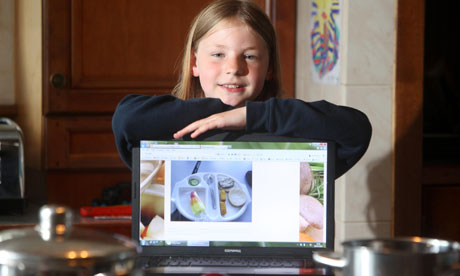
Girl banned from taking photos of school meals for hit blog

Martha Payne, 9, forced to abandon popular NeverSeconds blog, after council refused to let her post any more pictures


A nine-year-old Scottish girl who attracted two million readers to a blog documenting her school lunches, consisting of unappealing and unhealthy dishes served up to pupils, has been forced to end the project after the council banned her from taking pictures of the food in school.

Martha Payne, from Argyll, started the blog at the end of April, initially as a writing project with her father. With the permission of teachers she photographed lunches as they arrived on their white plastic trays and gave the contents – generally meagre, often fried – marks out of 10 on a "Food-o-meter" scale for how healthy they were and whether or not she found any stray hairs.

In little over a week the blog, NeverSeconds, was being posted on social networking sites and had received 100,000 visitors. Martha got a tweet of congratulation from the chef-turned-campaigner Jamie Oliver.

Soon afterwards, pupils at the school were informed they could have as much salad and fruit as they wanted with their lunch. Martha began encouraging readers to donate to a charity, Mary's Meals, assisting with school food in east Africa, and they contributed £2,000. The worldwide readership meant she was sent photos from schools around the world, which she published alongside her own. It was apparent that overseas pupils were being offered far healthier dishes.

Martha blogged anonymously under the name Veg, and as publicity for the blog picked up she was featured and named in a series of newspapers, as well as other food blogs. That, it seems, was the final straw for the local council, Argyll and Bute, which runs her primary school.

On Thursday, came a post from Martha from titled simply "Goodbye": "This morning in maths I got taken out of class by my headteacher and taken to her office. I was told that I could not take any more photos of my school dinners because of a headline in a newspaper today.

"I only write my blog not newspapers and I am sad I am no longer allowed to take photos. I will miss sharing and rating my school dinners and I'll miss seeing the dinners you send me too. I don't think I will be able to finish raising enough money for a kitchen for Mary's Meals either."

Martha's father, Dave, added a note of explanation, saying: "Martha's school have been brilliant and supportive from the beginning and I'd like to thank them all. I contacted Argyll and Bute council when Martha told me what happened at school today and they told me it was their decision to ban Martha's photography."

As the reader count on the blog ticked up at a faster speed than ever, the council faced a predictable storm of protest on Twitter and other social networking sites. The council had no immediate response to the decision, although last month it said its school meals were "fully compliant with nationally agreed nutritional standards".


http://www.guardian.co.uk/uk/2012/jun/15/girl-photos-school-meals-blog

Wednesday, 13 June 2012

In Paris, Ghosts of Bistros Past

First night on our Paris vacation, we eat at Au Passage in the 11th arrondissement. It’s a bistrot à vin, a modern wine bar with small plates, which looks like some old tabac (tobacco store)—consciously retro, in other words (our waiter’s a cute guy in a T-shirt). We demolish a hunk of coarse-grained lamb and fig pâté and a pretty arrangement of raw fish (tuna, with thin slices of rhubarb and radish), and drink a cool Gamay. It’s nice, but clearly this is not the meal we came to Paris hoping to find—me, my husband, and our friend Michelle. It's too fussy, too composed, and, honestly, just too California. “I want Amélie food,” Michelle says, whining, still hungry. Strangely, I know what she means: French dishes both nostalgic and charming, served in some mirrored, wood-paneled bistro right out of Brassaï, the Hungarian-born photographer who documented the seedy glamour of Paris's streets and bistros starting in the 1920s.

http://www.chow.com/food-news/117155/in-paris-ghosts-of-the-classic-bistro/

Poland for foodies

There’s more to Polish cuisine than vodka and dumplings. In this excerpt from the brand-new Lonely Planet Poland travel guide, we give you the low-down on Poland’s most tempting street food, the best regional specialities, food you can forage for yourself, and some dishes you might not dare to try…


http://www.lonelyplanet.com/poland/travel-tips-and-articles/77092

Oishikunai oder zehn Dinge, die Sie über Sushi nicht wissen wollten

Für mein neues Buch “Rotes Gold” habe ich mich eingehend mit Sushi befasst. Dabei sind mir auch ein paar unerfreuliche Dinge bezüglich der Qualität von Sushi aufgefallen, die ich hier zusammengestellt habe. Alle sind oishikunai – das ist Japanisch und heißt “nicht lecker”.

http://www.netzfundbuero.de/2012/03/02/oishikunai-oder-zehn-dinge-die-sie-uber-sushi-nicht-wissen-wollten/

Monday, 11 June 2012

Zum Heulen, dieser Wasabi

Giftgrün und höllisch scharf: Was wäre Sushi ohne Wasabi? Doch in Wahrheit besteht das, was uns Deutschen in Tuben und auf Tellern als Wasabi untergejubelt wird, zumeist lediglich aus billigem Senfpulver und grünem Farbstoff.

Was macht der Mann da bloß? Als ich den Kellner um ein wenig Wasabi zu meinem Sushi gebeten habe, schwebte mir ein Klecks dieser giftgrünen Paste vor. Aber nun steht er mit einer seltsam aussehenden Reibe vor meinem Tisch und zerraspelt eine schwärzliche Knolle.

"Was ist das?", fragte ich.

"Frisch geriebener Wasabi", erwidert der Kellner.

Ich probiere. Die Raspeln schmecken völlig anders als jenes Wasabi, das ich aus anderen Sushi-Restaurants kenne. Ihre Schärfe ist subtiler, wird von einem süßlichen Unterton und dem Geruch ätherischer Öle begleitet. Und froschgrün ist sie auch nicht, eher mintfarben.

"Schmeckt ganz anders als der Wasabi, den es sonst immer gibt", sage ich.

Der Ober antwortet nicht, sondern lächelt nur. Vermutlich erscheint ihm die Wahrheit zu unhöflich, um sie auszusprechen. Sie lautet nämlich, dass ich jahrelang gar keinen Wasabi gegessen habe.

Sondern Chemiepampe.


http://www.spiegel.de/wirtschaft/service/wasabi-paste-aus-der-tube-besteht-aus-senfpulver-und-gruener-farbe-a-833852.html#ref=rss

Sunday, 27 May 2012

Bodega at St.Peter's Market in Cork

The Bodega @ St. Peter’s Market is Cork’s most elegant venue for eating, drinking and dancing, Housed in the St. Peter’s Market building in Cork’s historic Coal Quay, the Bodega has timeless appeal.

Elegant and welcoming the Bodega boasts the work of many artists from JB Yeats to Jim Mc Carthy, chandeliers good enough to hang in the White House, pewter bar counters and many one off elements.


http://www.bodegacork.ie/ 


Photos copyright Elmo 2012

Clonakilty Salad - St. Peter's Market Cork

Clonakilty Salad - St. Peter's Market Cork

Clonakilty black pudding
Serrano ham
quail eggs
parmesan
seasonal leaves 
marinated onions
red peppers
Lima beans
with red wine & star anise dressing

see the menu of Bodega at St. Peter's Market


or try the Blackpudding companies recipe:


What Colleges Can Bring to the Table

When it comes to encouraging the development of a healthy and sustainable food-production system in the United States, colleges are in a unique position to nourish young minds, both nutritionally and intellectually, in ways that can change things for the better.

As large institutions that supply food in quantity, colleges can use their purchasing power to bolster the economic life of their communities by supporting local and regional farmers, whose numbers are declining around the United States. As educators, these colleges are also able to provide their students perspective on, as well as training in, sustainable methods of farming and food production, offerings sorely needed in a food-supply chain increasingly dominated by large corporations.

The industrialized food system that supplies most grocery stores and institutional larders is run by and for ever-more-consolidated food-production companies that have little interest in maintaining thriving local economies or making customers' health a priority. Profit is the primary concern, and the social value of food is widely ignored.


http://chronicle.com/article/What-Colleges-Can-Bring-to-the/131923/?sid=wb&utm_source=wb&utm_medium=en

Schiefer trifft Muschelkalk

Wunderbare Weine von der Saar

Bereits in 5. Generation sind es die Frauen der Familie, die bei den Willems die Geschäfte leiten. Das heutige Familienweingut wurde bis 1971 als Gemischtbetrieb geführt. Dann heiratete Maria Willems ihren Karl, der dank eines gemeinsamen Urahns den gleichen Nachnamen trug wie sie. So entstand der Doppelname, den das Weingut Willems-Willems bis heute fortführt.

http://www.schiefer-trifft-muschelkalk.de/willems-zur-person.php

NeverSeconds

One primary school pupil's daily dose of school dinners.


http://neverseconds.blogspot.de/2012_05_01_archive.html

Wednesday, 23 May 2012

Julia Child for the Next Generation of Eaters


“People who love to eat are always the best people.” Hard to argue with that adage of Julia Child’s! It’s also the epigraph for a new illustrated “all ages” biography that hits the shelves today. Bon Appétit! The Delicious Life of Julia Child, published by Schwartz & Wade, is designed to captivate the next generation of eaters with Child’s larger-than-life story, from high school French class (très mal, according to author Jessie Hartland) to college pranks to better-known points on Child’s professional and personal timeline. In 48 very busy and colorful pages, Hartland hand-writes and draws the highlights of Child’s career along with plenty of charming asides and winning, grown-up-pleasing details. Don’t miss the page on Child literally covering the waterfront while researching la vraie bouillabaisse in Marseille.

Rock star that she is, Child is also getting the biographical treatment from Beatles biographer Bob Spitz, in Dearie: The Remarkable Life of Julia Child, due from Random House in August, just in time for what would have been Child’s 100th birthday on August 15. Stay tuned here and on Facebook for updates on the centennial observations.

Thursday, 17 May 2012

Delicious dishes for your Diamond Jubilee street party

Trestle tables at the ready! With a certain Diamond Jubilee just around the corner, Diana Henry gives some street-party staples a thoroughly 21st-century twist.

Click on the links below for the full recipes.

Jubilee chicken

Spiced wild and brown rice salad

Sausage and chutney rolls

Tomato, melon and cucumber salad with mint dressing

Asparagus, pea and crisped bread salad

Iced tea

Jubilee meringue cake

Jubilee fairy cakes


http://www.telegraph.co.uk/foodanddrink/recipes/9246285/Delicious-dishes-for-your-Diamond-Jubilee-street-party.html

Families waste £680 of food a year

The average family with children throws away £680 of food a year, according to research.

The sum, which equals £13 a week, makes a total of £12 billion across the nation.

The study found that the average household spends £68 a week on food but that 91pc of households with children admit to throwing some of that food away.

Researchers said that the value of wasted food was heavily underestimated by families.

In a poll of 2,116 adults, average families estimated wasting more than £270 a year (£5.20 a week) on discarded food.


http://www.telegraph.co.uk/finance/personalfinance/consumertips/household-bills/9268980/Families-waste-680-of-food-a-year.html

Kaffee, die gesunde Sünde

Noch ein Tässchen für ein langes Leben? Einer großen US-Studie zufolge wirkt Kaffee positiv auf die Gesundheit. Trotzdem leben typische Kaffeetrinker im Schnitt kürzer - weil sie andere ungesunde Gewohnheiten haben.

In einem Punkt sind sich die Forscher sicher: Am Koffein kann es nicht liegen. Denn ihren Studiendaten zufolge beeinflussen entkoffeinierter und gewöhnlicher Kaffee die Gesundheit gleichermaßen. Falls also Substanzen aus dem Heißgetränk ein wenig vor Herzleiden und anderen Krankheiten schützen, müssen es andere sein als das für die aufputschende Wirkung verantwortliche Koffein.

http://www.spiegel.de/wissenschaft/medizin/kaffee-wirkt-eher-positiv-auf-die-gesundheit-als-negativ-a-833357.html#ref=rss

Don't come dine with me: Britons shun dinner parties as costs soar

Four in ten adults have turned their backs on hosting dinner parties because they cost too much money and take up too much time, a survey has found.

In a demonstration of how the economic downturn is changing people’s living habits, the equivalent of almost 19 million people are shunning throwing dinner parties because of the time and expense involved.

This is equivalent to almost 40 per cent of the adult population.

The survey, conducted by YouGov on behalf of the Very Lazy cooking ingredients brand, found that people are not hosting dinner parties very often because of the soaring cost of food and the effort required to cook for friends.

Meanwhile a quarter of people avoid having dinner parties because of the high levels of stress involved in entertaining other people.

The cost of the average dinner party in the UK is around £60 and most households host around six dinner parties a year.


http://www.telegraph.co.uk/news/uknews/9269922/Dont-come-dine-with-me-Britons-shun-dinner-parties-as-costs-soar.html

Gefälschte Schweine-Ohren aus Gelatine und Seife

Im Dunkeln leuchtendes Fleisch, mit Schwermetallen belastete Reiskörner, Kohl mit Formaldehyd – in China gibt es haarsträubende Lebensmittelskandale. Der neueste: "Schweine-Ohren" mit Seifenzusatz.

Ein neuer Lebensmittelskandal erschüttert China – diesmal geht es um falsche Schweine-Ohren. Die Polizei gehe im Osten des Landes Vorwürfen nach, dass Händler statt echter und als Leckerbissen geltender Schweine-Ohren Produkte aus Gelatine verkauften, berichtete am Mittwoch die amtliche Tageszeitung "China Daily".

Der Gelatine-Trick flog auf, nachdem sich mehrere Verbraucher beschwerten, dass auf einem Markt in Ganzhou in der Provinz Jiangxi gekaufte Ohren bei der Zubereitung einen üblen Geruch verströmten. Bei Labor-Untersuchungen stellte sich dann heraus, dass die Ohren aus Gelatine und Natriumoleat, einem Seifenzusatz, verfertigt wurden.

Diverse Fälle verseuchter Lebensmittel

China wird immer wieder von Lebensmittelskandalen heimgesucht. Erst vor einer Woche war aufgeflogen, dass Händler Kohl mit gefährlichem Formaldehyd bespritzten, um die Ware frisch zu halten.

2008 war in der Volksrepublik Milchpulver auf den Markt gekommen, in das die gesundheitsschädliche Chemikalie Melamin gemischt worden war, um einen höheren Proteingehalt vorzutäuschen. Sechs Kinder starben, fast 300.000 Kinder mussten wegen schwerer Nierenleiden behandelt werden.

Im Dunkeln leuchtendes Fleisch

Die Regierung kündigte daraufhin ein strenges Vorgehen gegen das Verunreinigen von Lebensmitteln an. Bei besonders schweren Vergehen können Verantwortliche mit dem Tod bestraft werden.

Allerdings gab es in China auch nach dem Milchpulverskandal immer wieder Fälle von verseuchten Lebensmitteln.

So wurden mit Schwermetallen belastete Reiskörner entdeckt, mit krebserregenden Nitraten verseuchte Bohnensprossen, chemisch gefärbte Brötchen, Schweinefleisch mit Anabolika-Rückständen oder mit einer so hohen Bakterienkonzentration, dass das Fleisch im Dunkeln leuchtete.


http://www.welt.de/vermischtes/weltgeschehen/article106323314/Gefaelschte-Schweine-Ohren-aus-Gelatine-und-Seife.html

Could France learn to love British beef?

France is famous for its gastronomy, while poking fun at British food is a Gallic pastime. There was also no love lost between French and British farmers in the wake of the BSE crisis. So why is a top Paris butcher now lauding British beef?

In a converted cellar, a man with unruly hair, seven-day stubble and a bloodied apron is cutting up meat.

The ease with which the knife cuts the thick steaks is impressive. And the white marbling of fat is not what you're used to seeing. Not in France anyway.

The man is Yves-Marie Le Bourdonnec, butcher to the stars.


Monday, 14 May 2012

Only one in five eats five a day, poll suggests

Just one in five Britons eats the recommended five portions of fruit and vegetables a day, a poll for World Cancer Research Fund (WCRF) suggests.

The Department of Health first launched its five-a-day campaign in 2003.

But the WCRF says its survey of more than 2,000 UK adults shows people still find achieving that goal difficult.


http://www.bbc.co.uk/news/health-18032209

Chinese alarm over formaldehyde-tainted cabbages

Vegetable sellers in China have been caught spraying cabbages with a formaldehyde solution to keep them fresh in transit, the state news agency Xinhua has reported.

Xinhua said the practice had been common in eastern China for years.

The agency said it was being done because most farmers cannot afford refrigerated trucks for cabbages.

Formaldehyde is a toxic cancer-causing compound often used as a disinfectant and for embalming.

It can irritate the skin and cause breathing and digestive problems.

Cabbage is a staple food in China, often used as a filling in dumplings, but also stir-fried or pickled.

In recent years the country has faced a series of food safety scandals, including the lacing of baby-milk with the industrial chemical melamine.

Xinhua reported on Monday that dozens of wholesale vegetable dealers in Qingzhou city - in Shandong province - were caught selling cabbage sprayed with formaldehyde.

It did not say if the dealers had been arrested and what punishments they might face.

It said the practice has become so widespread over the last three years because vegetables in warmer months rot quickly in transit.

Correspondents say that China's wholesale vegetable dealers are not required to use refrigerated trucks for produce, and few can afford it.

China's health ministry in 2008 published a list of illegal food additives that included formaldehyde.

The chemical has also been reportedly used to soak some dried seafood to make it appear more fresh and plump.


http://www.bbc.co.uk/news/world-south-asia-17981323

Sunday, 13 May 2012

Mittagspause – und zwar richtig

Der Inhaber des kleinen, feinen Verlags im Münchener Osten schwört auf eine ausgiebige Mittagspause. Sein Unternehmen ist sein Lebenswerk, die Angestellten betrachtet er als erweiterte Familie. Arbeitstag für Arbeitstag lädt er sein Team großzügig zum Italiener ums Eck ein. Kneifen gilt nicht. Während die einen die großzügige Geste und die kurze Auszeit im Herzen von Haidhausen genießen, fühlen sich andere Kollegen vom generösen Chef fast zwangsbeglückt.

So wie der IT-Experte Klaus, der lieber durcharbeiten würde, unruhig auf den Espresso und das Signal zum Aufbruch wartet, sich aber dem Gruppendruck fügt: „Die anderen lieben die ausgiebige Mittagspause, ich will da nicht quertreiben.“ Zur charmant ausgefüllten Patriarchenrolle des mitteljungen Chefs gehöre nun mal das Mittagsritual, seufzt er und registriert erstaunt die Anwaltsteams am Nebentisch, die offenbar ebenfalls gerne mit der halben Kanzlei einkehren.

Das stärkt das Gemeinschaftsgefühl, steigert die Leistung, das Gehirn reorganisiert sich in Pausen: Diese Binsenweisheiten und all die klugen Studien dazu, dass ein unterzuckertes Gehirn seine Zellen nur schwer in Gang bringt, die können die meisten zitieren.


http://www.faz.net/aktuell/beruf-chance/arbeitswelt/wohl-bekomm-s-mittagspause-und-zwar-richtig-11738990.html

Sunday, 6 May 2012

Unter Scharfmachern und Feuerspuckern

Zhang Hui Qiang, der Chefkoch, bestimmt die Mixtur und hütet ihr Geheimnis. Seine Hilfsköche dürfen den Brei nur umrühren. Das tun sie freilich mit Hingabe, denn jetzt kommt es auf ihre Zuverlässigkeit an. Volle zwei Jahre lang sind sie verantwortlich dafür, dass das kulinarische Vorhaben kein Reinfall wird. „Dou ban“, die klassische Chili-Bohnenpaste aus der chinesischen Provinz Sichuan, kann nur perfekt gelingen, wenn sie in dieser Zeitspanne zweimal pro Tag kräftig umgerührt, tagsüber der Sonne und in der Nacht der Feuchtigkeit ausgesetzt wird. Zweihundert riesige offene Tonkrüge stehen in Reih und Glied im Garten, und jeder ist zur Hälfte mit fünfzig Kilo der scharfen Paste gefüllt. Nur bei Regen kommt ein Deckel auf die Bottiche. Sechs Monate lang fermentieren zunächst die weißen Sojabohnen darin, danach kommen mittelscharfe Chilischoten, Salz und eine Reihe ausgesuchter Gewürze hinzu, und dann braucht es noch einmal achtzehn Monate, bis das pikante Langzeitwerk vollendet ist. In der Zwischenzeit heißt es: wieder und wieder umrühren.

http://www.faz.net/frankfurter-allgemeine-zeitung/reiseblatt/essen-und-trinken-unter-scharfmachern-und-feuerspuckern-11737364.html#Drucken

Es ist angegrillt!

Der amerikanische Koch Jamie Purviance ist eine nicht eben übliche Partnerschaft eingegangen. Im Grunde sind seine diversen Grill-Bücher Werbeschriften der Firma Weber, des Marktführers für Grillgeräte. 1952 hatte George Stephen eine Art Urtyp des bekannten Kugelgrills erfunden, der heute das Markenzeichen der Firma ist. Purviance ist Absolvent des Culinary Institute of America (CIA), dessen strenge, inhaltlich aber durchaus kritisierbare Ausbildung übrigens international sicher zu viel Ansehen genießt. Die Liste der Purviance-Bücher ist beeindruckend. Es begann in Deutschland mit „Grillen mit Holzkohle“ (2009), gefolgt von der „Grillbibel“ (2010), „Steak“ (2011), „Chicken“ (2011), „Seafood“ (2012), „Räuchern“ (2012) und eben „Veggie“.


http://www.faz.net/aktuell/feuilleton/buecher/esspapier/kochbuchkolumne-esspapier-es-ist-angegrillt-11715484.html

Wiedersehen in Belgien

Die belgische Spitzenküche zeigt sich nach ein paar ruhigeren Jahren wieder deutlich erholt. Mit einer ganzen Generation jüngerer Köche hat man heute den Platz zurückerobert, den man früher regelmäßig besetzte: erstaunlich viel gute Küche für ein so kleines Land. In diesem großen, vor allem inhaltlich prächtig gemachten Band finden wir sie alle. Der neue 3-Sterne-Koch Geert de Mangeleer („Hertog Jan“, Brugge) ist vertreten, Filip Claeys („De Jonkman“, Brugge), Sang-Hoon Degeimbre („L’Air du Temps“, Noville-sur-Mehaigne), Kobe Desramaults („In de Wulf“, Dranouter), Viki Geunes (t Zilte“, Antwerpen), Roger van Damme („Het Gebaar“, Antwerpen) oder Thierry Theys („Nuance“, Duffel).

Dazu kommen weiter Köche (insgesamt sind es 33) – alles unter dem Motto „Les Créateurs de Goût de la Cuisine Belge“. Der Grund für die Empfehlung dieses Buches ist nicht nur die die gebotene Übersicht über den Stand der Dinge in Belgien, sondern auch das vorbildliche Konzept. Eine solche Übersicht würde man sich alle paar Jahre auch in Deutschland wünschen, und zwar in der gleichen zurückhaltenden und informativen Form, sachlich und ganz ohne langatmige Selbstinszenierungen.


http://www.faz.net/aktuell/feuilleton/buecher/esspapier/kochbuchkolumne-esspapier-wiedersehen-in-belgien-11709035.html

Baskischer Meisterkoch Arzak: Der Drei-Sterne-Kindskopf

Nichts ist schöner, als den Finger in Spinat zu tauchen oder von Fischstäbchen die Kruste abzupulen. Nur eins war uns Kindern verboten: vor dem Fernseher zu essen. Das war nur zu besonderen Anlässen erlaubt, bei "Wetten, dass …?" oder "Dalli Dalli".

Juan Mari Arzak ist da großzügig. Der Baske lässt die kleinen und großen Gäste seines "Restaurante Arzak" nicht nur vor, sondern auf dem Fernseher essen, sie müssen nicht mal ihr Zimmer aufgeräumt haben. Sechs TV-Teller stehen bei ihm im Geschirrschrank, entwickelt von Philips, exklusiv. Wer möchte, kann sich einen Seeteufel auf Wellenrauschen bestellen, ohne Aufpreis: ein digitaler Bilderrahmen, darauf der Fisch - hurtig, Kinder, zu Tisch!


http://www.spiegel.de/reise/europa/meisterkoch-juan-mari-arzak-a-831139.html

Thursday, 3 May 2012

The 20 best restaurants in the world

The 50 best restaurants in the world were revealed on Monday night at a ceremony in London, as voted for by a panel of 800 experts. Below we list the top 20 establishments.

http://www.telegraph.co.uk/news/uknews/9237100/List-The-20-best-restaurants-in-the-world.html

Test Kitchen tips: Quinoa 101 (plus 6 recipes)


Quinoa is a South American grain-like crop that is increasingly becoming popular in North American cuisine. While the leaves of quinoa (pronounced KEEN-wah) plant can be cooked as a potherb, the seeds, or "grains" (while quinoa is not a true cereal, its seeds resemble and are similarly used like grains) of the plant are probably most commonly found (grains can be found at most major grocery stores), and can be cooked like rice, added to soups and stews, even popped.

Before cooking with quinoa, be sure to rinse the grains under running water; they are coated with sapopins (defensive compounds) that can give a finished dish a bitter taste if the seeds aren't rinsed before using.

For extra depth of flavor, try toasting the quinoa before cooking it. After rinsing the grains, dry them in a towel, then toast them briefly in a dry skillet until they color slightly and have a nutty aroma.

If you've never cooked quinoa before, the grains can be added to a variety of dishes, are easy to use and cook up quickly. Place the rinsed grains in boiling water (1 part seeds to 2 parts water) and cook until the quinoa is translucent and tender and the germ has spiraled out from the grain, 12 to 15 minutes (be careful not to overcook). Add the drained quinoa to salads, or flavor and serve as a side dish.


See recipes:
http://latimesblogs.latimes.com/dailydish/2012/04/test-kitchen-tips-quinoa-101-with-6-recipes.html

Wednesday, 25 April 2012

20 Foods Everyone Should Know How to Cook

Once, when cooking with a friend, I asked him to check if the artichokes were done. "Sure!" was the immediate response, followed by a pause, and then, "How do I know if they’re done?"

When first starting to cook, there are many foods and dishes that can be intimidating to prepare or seem overly complicated. But the truth is that when you boil it down to the basics, they are typically quite easy. Remember that good-tasting food doesn’t always take a lot of skill to make — just some basic know-how and good ingredients.


http://www.thedailymeal.com/20-foods-everyone-should-know-how-cook

Monday, 23 April 2012

British drinkers toast stout revival

It was famously enjoyed by Ena Sharples in the snug of the Rovers Return – the Coronation Street battle-axe often shared a glass of milk stout with her friend Minnie Caldwell.
Now bottled British stout is making a comeback as a popular tipple with a new generation of drinkers, thanks to new products from burgeoning craft and regional brewers.
Irish stout – notably Guinness – has dominated the market for well over a century, but in recent years the whole stout market has been in decline.
Now supermarkets are reporting strong sales of specialist bottled stout with eye-catching and quirky names being created by craft and micro-breweries. In March the Office for National Statistics gave stout new credibility by adding it to the "basket" of goods and services it monitors regularly to gauge living costs.
Stout is made using roasted malt or barley, hops, water and yeast. It originated in the early 18th century as porter – a blend of brown ale, mild ale and "well matured ale". It got its name because it was popular with London street market workers: the strongest variety was known as stout porter, which was eventually shortened to just stout.


 Pint of view? Camra does not include Guinness as one of the real stouts, which are becoming more popular with a new generation of drinkers. Photograph: Alamy

Sunday, 22 April 2012

How to make perfect pastry

Baking blind, resting, rolling out: top tips from master baker Richard Bertinet

http://www.guardian.co.uk/lifeandstyle/2012/apr/22/perfect-pastry-richard-bertinet

Did you know...?

  •     People unknowingly serve themselves more when they use a larger plate
  •     People frequently over-consume foods labelled as low-fat
  •     Children who use cash to pay for lunch often make healthier choices 
  •    Children prefer plates of food with six colours, while adults prefer just three
Source: Cornell University Food and Brand Lab


http://www.bbc.co.uk/news/health-17744446

Will adverts at the Olympics increase fast food consumption?

Health campaigners are calling for restrictions on fast food adverts at large sporting events, but would limiting these adverts make any difference to rising levels of obesity?

It is almost impossible to go a day without seeing some form of advertisement, whether plastered across large billboards, interrupting television programmes or personalised adverts online, which track our shopping habits by monitoring the websites we visit.

Latest research suggests that almost a quarter of adults are obese, and campaigners from the Academy of Medical Royal Colleges (AoMRC) say obesity is the "single greatest public health threat in the UK."

They are calling for companies like Coca-Cola and McDonald's to restrict advertising at the Olympics as it "completely sends the wrong message, especially to children," said Prof Terence Stephenson, a spokesman from AoMRC.


http://www.bbc.co.uk/news/health-17744446

Asparagus, royalty and the joys of seasonal eating

For some, having all food available at all times of the year reduces the pleasure of seasonal eating, but for others sampling what is freshest and ripest is still a cause for celebration.

It is "Spargelzeit" (asparagus season) in Germany. Just.


In my part of the world, the season opened on Thursday, with a formal tasting in the presence of dignitaries of the state of Brandenburg.

This matters. Just as the sighting - or rather hearing - of the first cuckoo in spring was once a British ritual, marked by a letter to the Times newspaper, so is the cutting of the first crowns of asparagus that peep out of the dark mounds of earth in Germany.

And now that the season is open, everybody in this country will be bombarded with the stuff for the next two months. 


http://www.bbc.co.uk/news/magazine-17753372

Thursday, 19 April 2012

Taste of America 7 Foods You Really Should Eat Before You Die

Stupid things are sometimes far more compelling to me than smart ones. For instance, I seldom think about the themes in Krzysztof Kieslowski’s epic Three Colors trilogy, but to this day I don’t understand why, in The Blues Brothers, the Good Ol’ Boys arrive at Bob’s Country Bunker at 3 a.m., ready to play a show in the middle of the night. Likewise, I can’t stop thinking about the idiocy that is the latest viral food meme, the 100 Foods to Eat Before You Die list that keeps bubbling up on Facebook.

http://ideas.time.com/2012/04/18/7-foods-you-really-should-eat-before-you-die/?iid=op-article-mostpop1

Incredible Miniature Food Sculptures

Tel Aviv-based artist Shay Aaron constructs incredible miniaturized food sculptures at 1:12 scale that look almost completely edible. You can see hundreds more photos on Flickr and he also makes miniature food jewelry which is available over on Etsy. (via flavorwire).
http://www.thisiscolossal.com/2012/04/incredible-miniature-food-sculptures/

Brusselicious