People who eat chocolate regularly tend to be thinner, new research suggests.
The findings come from a study of nearly 1,000 US people that looked at diet, calorie intake and body mass index (BMI) - a measure of obesity.
It found those who ate chocolate a few times a week were, on average, slimmer than those who ate it occasionally.
Even though chocolate is loaded with calories, it contains ingredients that may favour weight loss rather than fat synthesis, scientists believe.
http://www.bbc.co.uk/news/health-17511011
Tuesday, 27 March 2012

Monday, 26 March 2012
The Meatless (and Less Meat) Revolution
This year, the average American will eat 165.5 lbs. of beef and poultry. That may sound like a lot, but it’s actually a 12% decline compared to 2007, when an annual intake of 189 lbs. of meat per person was standard. This week, chances are pretty good you’ll be hearing about the financial and health benefits of eating less meat, during “Meatout” events scheduled around the country.
http://moneyland.time.com/2012/03/22/the-meatless-and-less-meat-revolution/?xid=rss-topstories&utm_source=feedburner&utm_medium=feed&utm_campaign=Feed%3A+time%2Ftopstories+%28TIME%3A+Top+Stories%29
http://moneyland.time.com/2012/03/22/the-meatless-and-less-meat-revolution/?xid=rss-topstories&utm_source=feedburner&utm_medium=feed&utm_campaign=Feed%3A+time%2Ftopstories+%28TIME%3A+Top+Stories%29
Five Common Entertaining Mishaps

You’d assume that someone who’s cooked professionally for many years would have the art of entertaining down to a science. I wish I could say I’ve got it nailed, but every party teaches me something. One thing is for sure: Murphy’s Law—if anything can go wrong, it will—rules! Here are five likely mishaps and how to fix them.
Market Upheaval: You saw it at the store a week ago, but suddenly one or more crucial ingredients you were counting on for your party, disappear. Don’t waste your energy obsessing over it. Figure out a substitution; you just might create something even better than the original dish you’d planned.
Mechanical Failures: Oven on the blink? Hope you’re on good terms with your neighbors, or fire up your grill. Plumbing nightmares usually happen on weekends, when plumbers are either off, or charging double-time. Our sink and toilets backed up once, just as about 100 people arrived for an informal reception after a memorial service. Luckily, we were in the mountains with an outdoor hose and lots of trees.
Wardrobe Malfunction: Although we live in a casual world, someone is likely to show up dressed to the nines – or perhaps, particularly if they don’t know you—inappropriately. Feel for them. Offer them a sweater—a turtleneck, perhaps?—in case their outfit is so skimpy, they’re shivering in your energy-saving environment.
Illness: If you get sick and you’re cooking, cancel. No one wants your germs. A sick child presents more options. A cold can be quarantined, but the stomach flu presents icky problems. It’s only fair to call your guests and let them decide.
Recipe Disasters: Keep your smartphone or computer handy, so that if something goes wrong with a recipe, you can google it to figure out a fix. If Google is where the Apple Genius Bar workers turn to for help, why not you? When you’re under a time crunch, the internet is faster than a panicked search among your cookbooks.
http://live.gourmet.com/2012/03/five-common-entertaining-mishaps/
Wednesday, 21 March 2012
Top Chef
The man who runs the best restaurant in the world cannot afford his own home. He lives in an airy and light rented apartment in the old part of Copenhagen and cycles to work, pedaling through the streets with his 4-year-old daughter tucked cozily in his bike cart as he tries to get her to school on time. After dropping her off, he stops at a nearby coffee bar to down an espresso and a yogurt that will be his sole meal until his restaurant's staff dinner.
By now René Redzepi, the chef at Noma, could have TV deals and restaurants opening up in the world's major cities — and certainly a house in his own name — but that is not the kind of ambition that drives the 34-year-old Dane. Where many leading chefs seek to build empires, Redzepi wants only to dig deeper into his immediate surroundings. This helps explain why he is standing in his restaurant kitchen offering a skeptical patron not some truffle-covered delicacy from France or a pricey bit of sea urchin from Japan but a plate of scuttling Danish ants. "They're delicious," he says, "and they're Danish."
Read more:
http://www.time.com/time/magazine/article/0,9171,2109150,00.html#ixzz1pmBjgnKt
By now René Redzepi, the chef at Noma, could have TV deals and restaurants opening up in the world's major cities — and certainly a house in his own name — but that is not the kind of ambition that drives the 34-year-old Dane. Where many leading chefs seek to build empires, Redzepi wants only to dig deeper into his immediate surroundings. This helps explain why he is standing in his restaurant kitchen offering a skeptical patron not some truffle-covered delicacy from France or a pricey bit of sea urchin from Japan but a plate of scuttling Danish ants. "They're delicious," he says, "and they're Danish."
Read more:
http://www.time.com/time/magazine/article/0,9171,2109150,00.html#ixzz1pmBjgnKt
Sunday, 18 March 2012
Japan's obsession with perfect fruit

Classical music plays softly over the speakers in the Senbikiya shop in central Tokyo. The uniformed members of staff are politely attentive, ushering the customers to chairs and crouching down beside them to take their orders.
The ceilings are high, the fittings elegant, the lighting tasteful and the displays are beautiful. But this is not some designer handbag emporium or high-end jewellery store. Senbikiya is a greengrocers.
Ushio Oshima is showing us around. He is a sixth-generation member of the shop's founding family. The business began back in the 19th century, piling fruit high and selling it cheap.
http://www.bbc.co.uk/news/world-radio-and-tv-17352173
Thursday, 15 March 2012
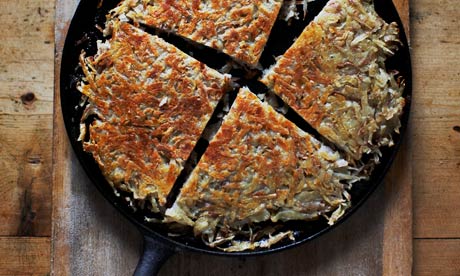
St Patrick's Day recipe: pan boxty
In Co. Wexford and Co. Tipperary I was given recipes for "grated cakes in the pan", both of which were essentially pan boxty. Granny Toye from Clones, Co. Monaghan, now 88 years of age, gave this recipe to me. Granny Toye says that pan boxty may be eaten hot or cold and may be reheated. A tablespoon of fresh herbs provides a delicious, if untraditional, flavouring to the dish.
 http://www.guardian.co.uk/lifeandstyle/2012/mar/12/st-patricks-day-recipe-pan-boxty
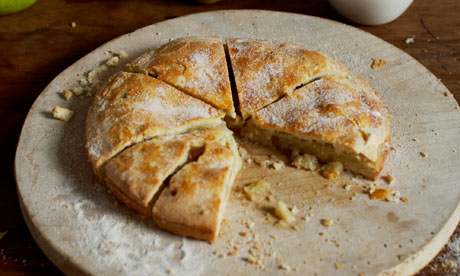
St Patrick's Day recipe: Irish apple cake
Apple cake recipes vary from house to house, and the individual technique will have been passed from mother to daughter for generations. It would originally have been baked in a bastible or pot beside an open fire and later in the oven or stove on tin or enamel plates – much better than ovenproof glass because the heat travels through and cooks the pastry base more readily.

http://www.guardian.co.uk/lifeandstyle/2012/mar/14/dessert-st-patricks-day?CMP=twt_gu
http://www.guardian.co.uk/lifeandstyle/2012/mar/14/dessert-st-patricks-day?CMP=twt_gu
Monday, 12 March 2012
Forgotten foods: Getting them back on the table
Black pudding made from fresh blood may not be something you think is worth fighting for, but it is part of the battle to bring Britain's forgotten food back into supermarkets and our homes.
It's not your average culinary dilemma, but then again it's not the average ingredient. How do you transport fresh pigs' blood quickly enough to make black pudding before the blood coagulates?
Nowadays a dried blood-powder mix is used, but it doesn't taste anywhere near as good as using fresh blood, say connoisseurs of the food.
It's is just one of the challenges facing a growing movement of people trying to revive the country's forgotten foods and, most significantly, get them back into supermarkets.
In recent years there has been a growing appreciation of Britain's distinctive regional foods. Many people have embraced farm shops, farmers' markets and specialist shops.
http://www.bbc.co.uk/news/magazine-17255796
It's not your average culinary dilemma, but then again it's not the average ingredient. How do you transport fresh pigs' blood quickly enough to make black pudding before the blood coagulates?
Nowadays a dried blood-powder mix is used, but it doesn't taste anywhere near as good as using fresh blood, say connoisseurs of the food.
It's is just one of the challenges facing a growing movement of people trying to revive the country's forgotten foods and, most significantly, get them back into supermarkets.
In recent years there has been a growing appreciation of Britain's distinctive regional foods. Many people have embraced farm shops, farmers' markets and specialist shops.
http://www.bbc.co.uk/news/magazine-17255796
Schluss mit der Geschmacklosigkeit!
Jeder, der gerne reist und gerne isst, kann Geschichten erzählen von
kulinarischen Erweckungserlebnissen am Straßenrand, von Garküchen und
Trottoirrestaurants in Hanoi oder Kyoto, Bangkok oder Kanton, die aus
nichts anderem als einem Eisentopf mit glühenden Kohlen, einem großen
Kessel mit brodelnder Brühe, ein paar Plastikschemeln bestehen. Hier
hockt man in Feinschmeckers Himmelreich, das seine Pforten niemals
schließen möge, knackt unter Sternen und Tamarinden Krebse und
Langusten, zahlt lächerliche fünf, sechs Euro, die man für ein Spottgeld
hält. Und dann kommt man nach Hause zurück, sieht im Vorbeigehen, was
wirklich billig ist: Döner für 2,80 Euro, Currywurst für 2,20 oder
McDonald’s-Plastikpampe für 1,99 - und fragt sich, ob wir noch ganz bei
Trost sind, so billig und so schlecht zu essen.
Austria Recommends a Name Change for ‘Discriminatory’ Foods
Your menu has a dirty mouth, and you might not even realize it. That
spicy pasta – spaghetti alla puttanesca – literally means “whore’s
spaghetti.” In the U.K., you’ll find “spotted dick” on store shelves. In
Alpine Europe, double-baked rye bread is called “Negerbrot.” (The last
part of the word means “bread,” and you can probably figure out the
first part.) They’re all legitimate food items, but Austria is hoping
some of these names have caused offense for the last time.
The country routinely serves up traditional dishes whose names point
to a time far past. “Zigeunerschnitzel” is a typical pork cutlet topped
with a sauce made of peppers and onions. But when you order it, you’re
asking for a plate of “Gypsy steak.” “Mohr in Hemd” is a dessert made
with chocolate cake and whipped cream. Translated, its name means “Moor
in a shirt,” a nod to the North Africans that have migrated to Europe
throughout the centuries.
Coke and Pepsi change manufacturing process to avoid cancer warning
Coca-Cola and Pepsi are changing how they make
an ingredient in their drinks to avoid being legally obliged to put a
cancer warning label on the bottle.
The new recipe for caramel colouring in the drinks has less
4-methylimidazole (4-MEI) - a chemical which California has added to its
list of carcinogens.
The change to the recipe has already been introduced in California but will be rolled out across the US.
Coca-Cola says there is no health risk to justify the change.
Wednesday, 7 March 2012
Is the food revolution just a great big fat lie?
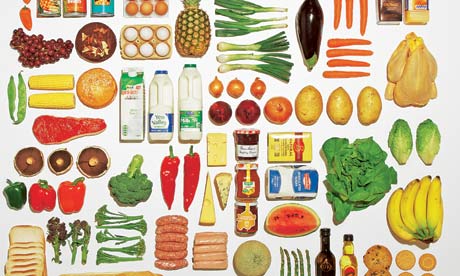
In the second half of the 20th century, western consumers were treated
to an unprecedented array of high-quality, low-cost food. Monochrome
national cuisines were spiced up by immigration, globalisation and
holidays abroad. Increased disposable income turned a restaurant
pilgrimage into an everyday jaunt. You could have pain au chocolat for
breakfast, a Mexican tortilla wrap for lunch and a Thai green curry for
dinner. Farmers' markets popularised heritage tomatoes. Celebrity chefs took up residence in gastropubs.
Now, I think it's great that in recent years we've woken up to the
wonders of fresh, local, home-cooked food. But this new food culture is
not quite as it seems. The spectacle of Jamie Oliver,
a cheeky lad from Essex, tearing basil leaves on to spaghetti was in
some ways a step forward for equality, but in other ways it was a sneaky
step back – because it made it that much harder to notice the dodgy
doublespeak that has come to dominate the way we talk about food.
Monday, 5 March 2012
Motoi Yamamoto's Incredible Salt Mazes

Japanese artist Motoi Yamamoto creates incredibly intricate mazes made entirely out of salt! Currently showing at the Hakone Open-Air Museum in Kanagawa, Japan is one of his newest works entitled "Forest of Beyond."
The story about why Yamamoto started down this path is a sad and tragic one. He was a third-year student at the Kanazawa College of Art in 1996 when his younger sister died at the young age of 24 — two years after being diagnosed with brain cancer. To ease his grief and to honor her memory, he starting working on these installations. Salt has a special place in the death rituals of Japan, and is often handed out to people at the end of funerals, so they can sprinkle it on themselves to ward off evil. Since 2001, he's been creating these amazing floor installations by filling a plastic bottle, usually used for machine oil, with white salt and then sprinkling it on the floor.
The Hakone installation (seen above and immediately below) looks like
a giant tree with visible branches. Working 14 hours a day, it took him
two weeks to complete.
As he told Japan Times,
"I draw with a wish that, through each line, I am led to a memory of my
sister. That is always at the bottom of my work. Each cell-like part,
to me, is a memory of her that I call up, like a tiff I had with her
over a pudding cake she took from the fridge. My wish is to put such
tiny episodes together."
See a selection of his other incredible works, below.
Sunday, 4 March 2012
Meal-in-a-pill : A staple of science fiction

It is a constant theme of early science fiction, and one you are
almost certainly familiar with: the man or woman of the future pops a
pill on to their tongue, knocks it back and is almost immediately
satisfied. For inside the little white capsule was a full three course
meal, designed to mimic the meals of the past in a single convenient,
portable dose.
Take the 1930 science fiction musical Just Imagine,
which tells the story of a man who is woken from a fifty year coma to
find himself in 1980s New York. As he tours a dystopian city – where
people are only known by number – he is taken to a “café”, where his new
friends order him up a meal of clam chowder, roast beef, beets,
asparagus, pie and coffee. With a little cajoling, he eventually
swallows the pill, before declaring that “the roast beef was a little
bit tough” and lamenting “the good old days”.
But if you look back
to these “good old days”, the roots of the meal-in-a-pill stem not from
the fertile minds of science fiction writers, but from the politics of
the day.
Friday, 2 March 2012
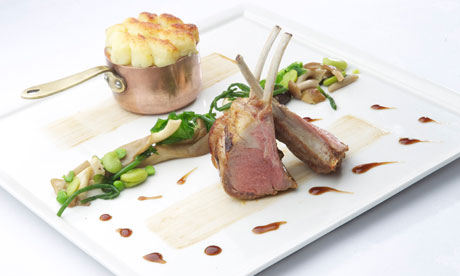
St David's Day recipes: duet of Welsh lamb
For a St David's Day treat, pick the bones out of these recipes celebrating Wales' famous lamb.
http://www.guardian.co.uk/lifeandstyle/2012/mar/01/st-davids-day-recipe-welsh-lamb?CMP=twt_gu
Subscribe to:
Posts (Atom)